02
Understand the scene.
Ask what’s around you and hear a description of the visible scene. Audio makes the result available without needing to look at a screen.
Assistive hardware / Early prototype
Wearable assistance for finding everyday objects, understanding surroundings, and taking part, for blind and low-vision people.
Early-stage prototype · Built at Cal Hacks
01 / Our mission
Finding your cup. Following a shared moment. Choosing what comes next.
Our mission is to make useful context more accessible through sound and wearable feedback, while keeping the person in control. We’re starting with small, everyday tasks and building from there.
02 / What we’re building
01
Ask for an everyday object. The prototype identifies and tracks a target, then uses available hand and depth information to guide a reach.
Object finding + hand guidance
Prototype capability. Performance depends on camera view, depth quality and the test setup.
02
Ask what’s around you and hear a description of the visible scene. Audio makes the result available without needing to look at a screen.
03
We’re exploring ways to explain recent visible events, so shared experiences can come with more context. This direction is still being developed.
03 / The technology
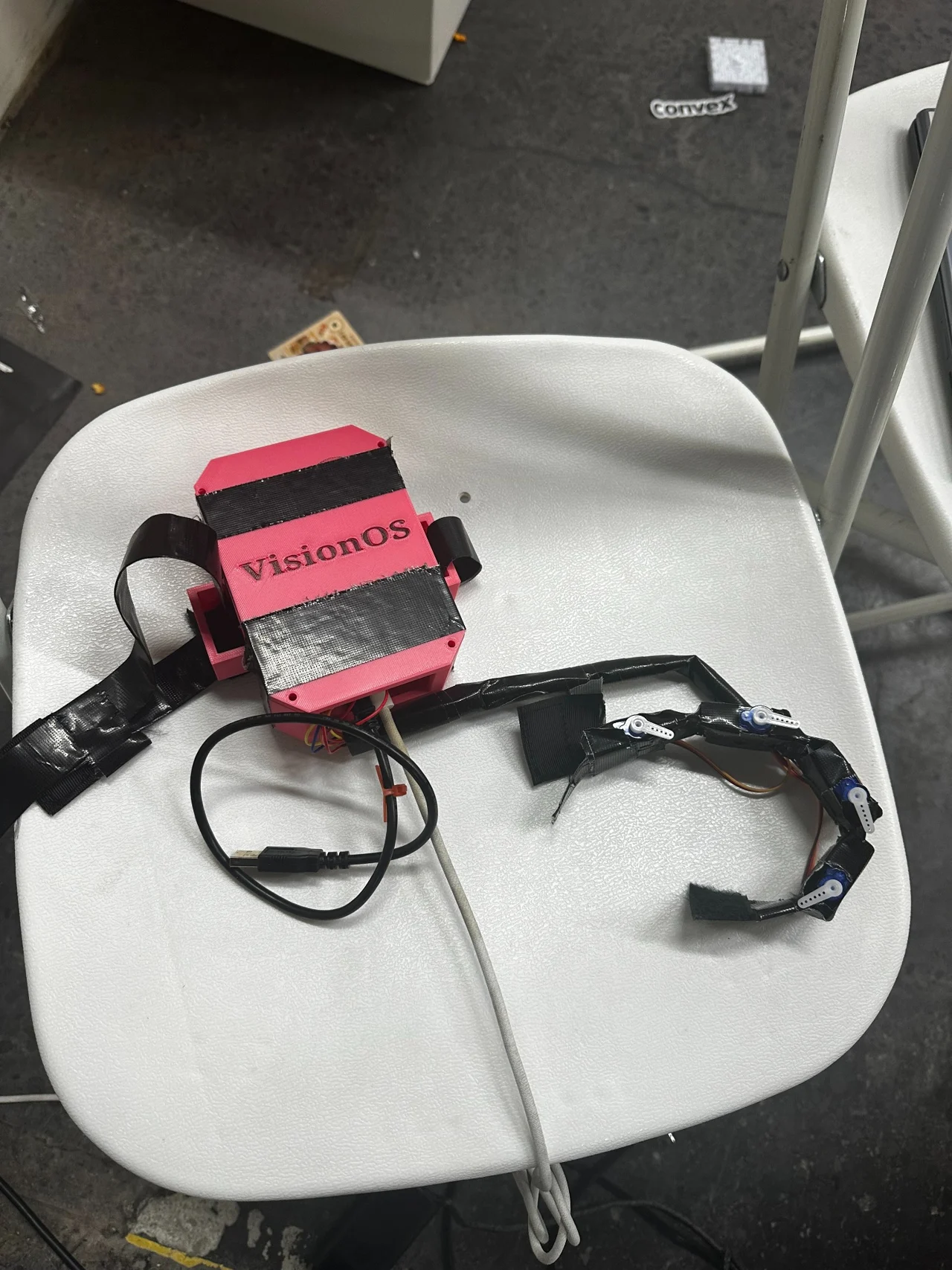
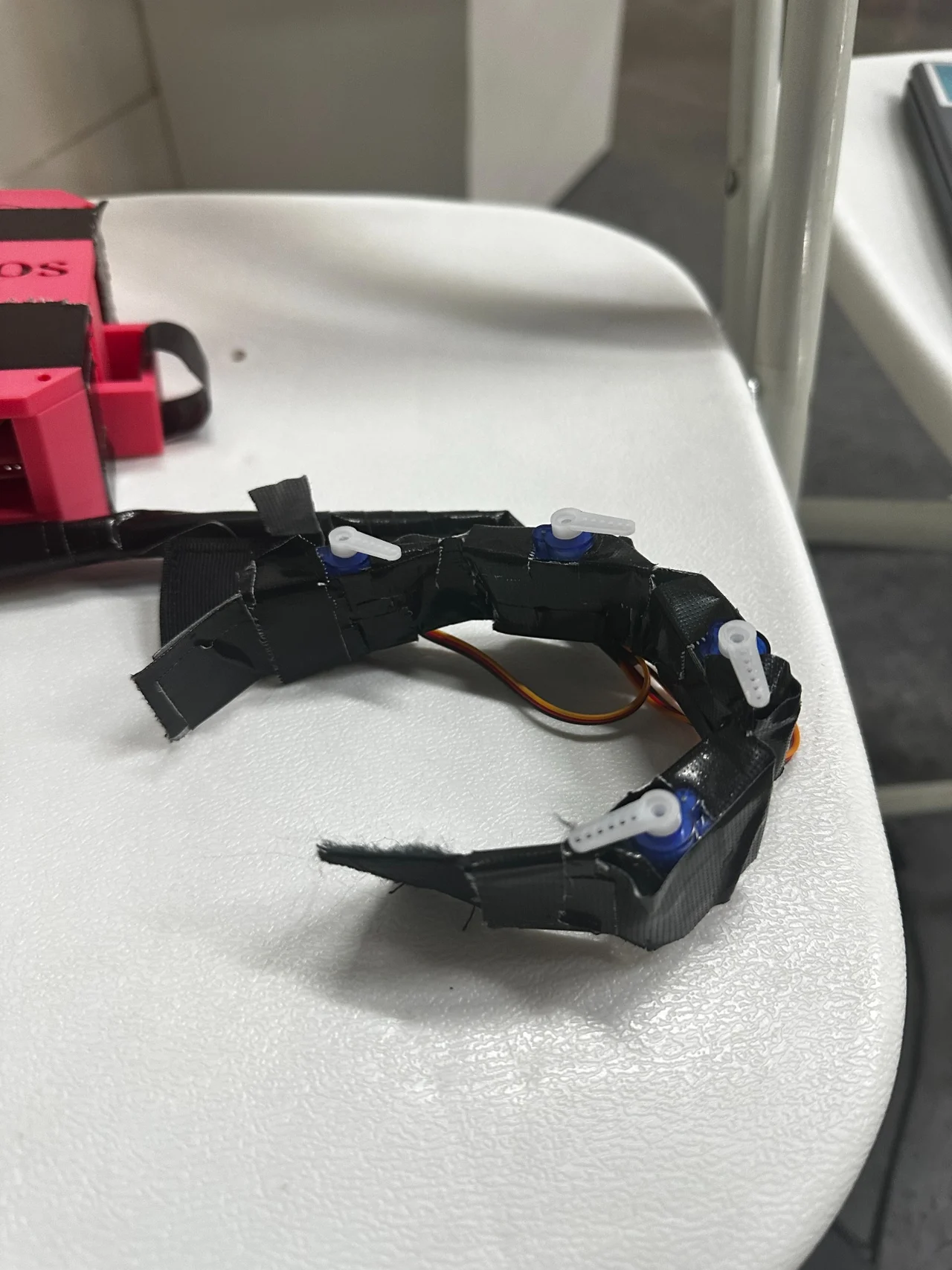
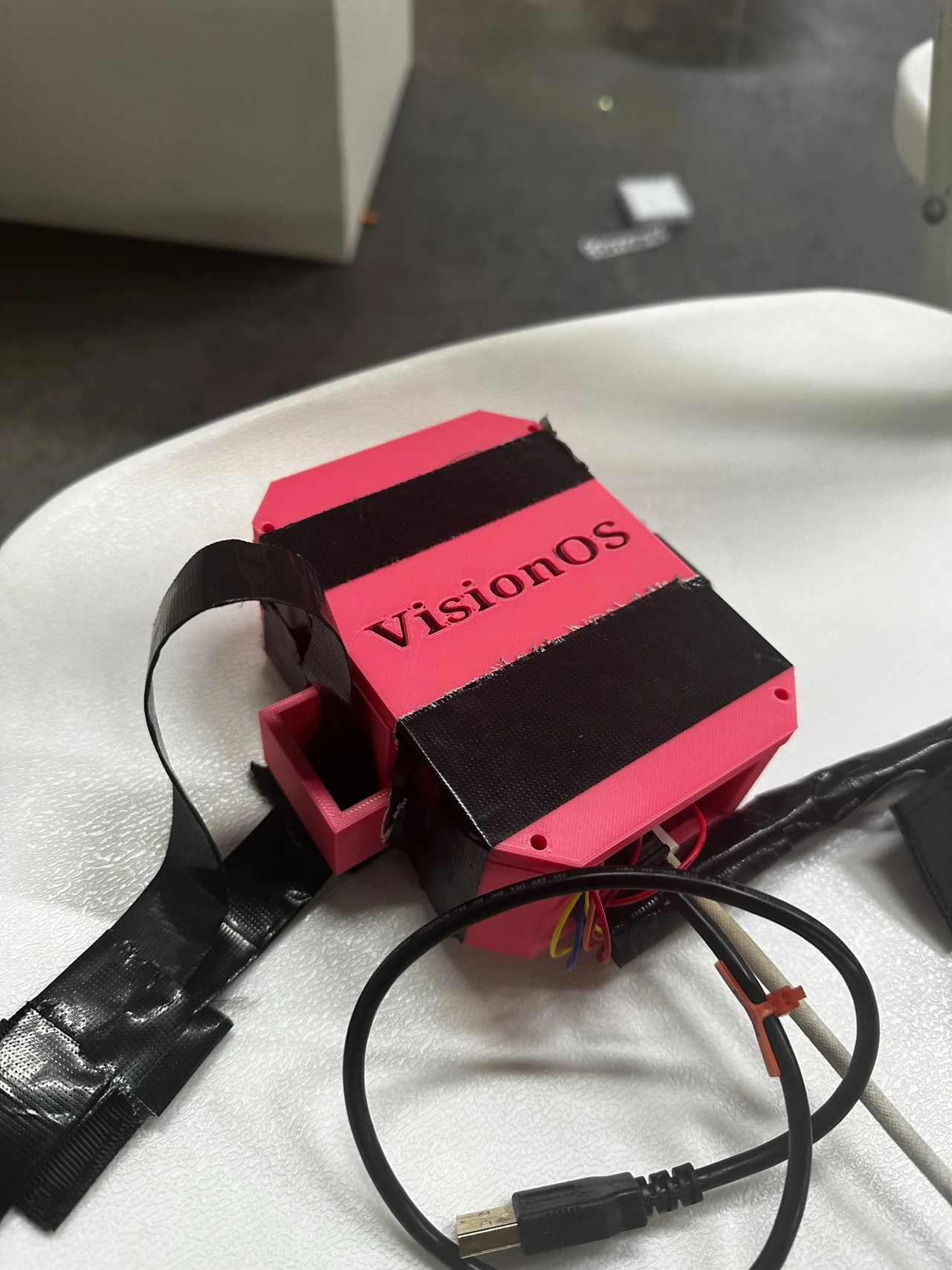
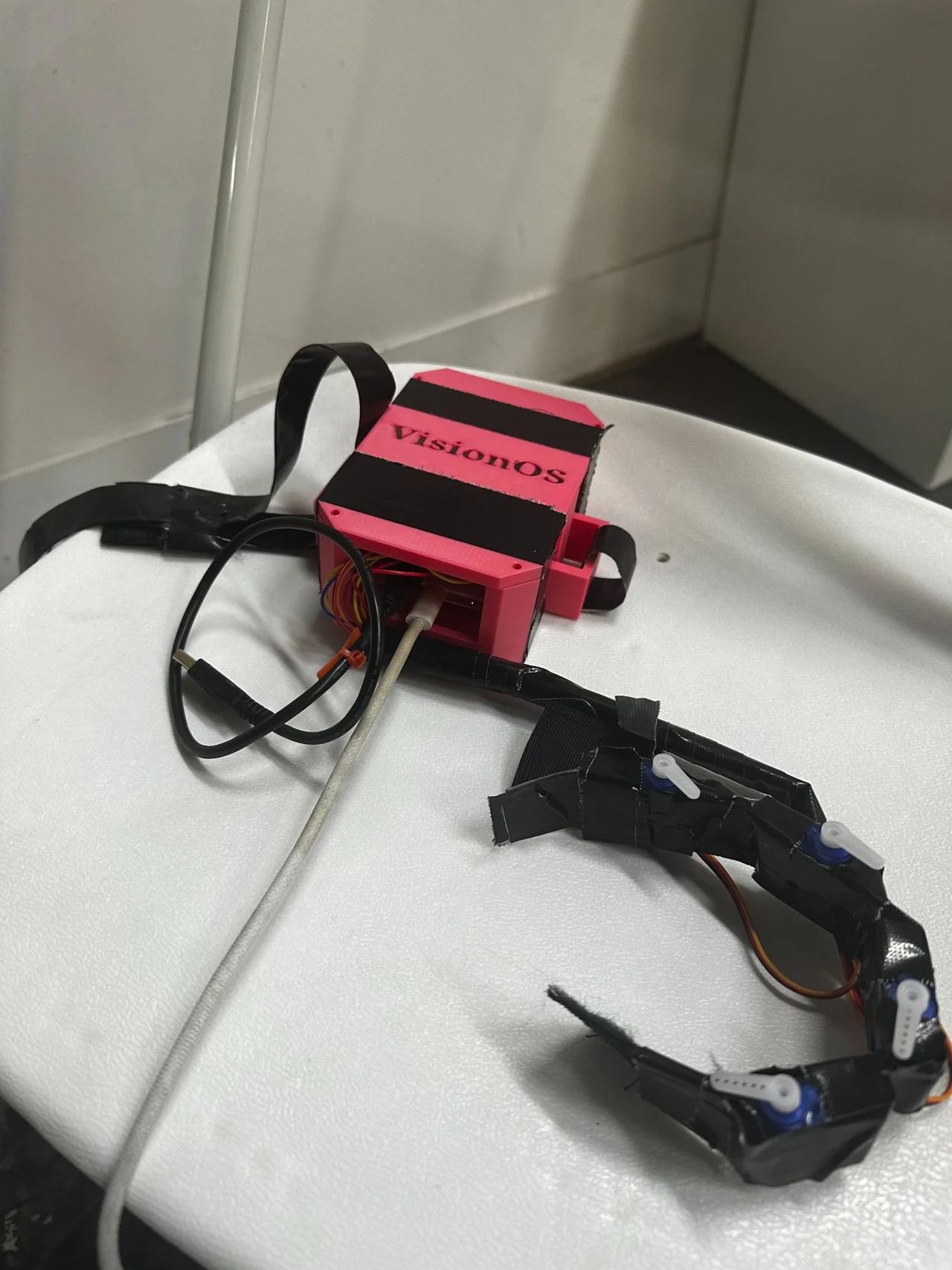
The wearable is the product we’re building. The camera and laptop support today’s prototype.
01 / Capture
An iPhone supplies the camera feed and available depth information.
02 / Understand
The laptop processes vision and voice requests, connecting scene analysis with object tracking.
03 / Respond
Audio explains the result. The hardware work brings physical feedback into the loop.
Current prototype setup: iPhone camera · laptop microphone and audio · wearable hardware
04 / Our story
We started VisionOS at Cal Hacks with a question: how can AI move beyond a screen and offer useful help in the physical world?
We’re a team building an early assistive-hardware prototype. Our next step is to learn from blind and low-vision people, accessibility practitioners, and hardware collaborators, so the problems we work on reflect real priorities.
Follow the build on GitHubLet’s build something useful.
Have a perspective, a question, or an idea for collaboration?
We’d like to hear from you.